
Upgrading a solar power plant into a hybrid energy complex with a battery energy storage system (BESS)
-
20MWh
capacity of the installed storage system
-
+40%
growth in the asset's annual income
-
6years
projected payback period
Context
Initial state
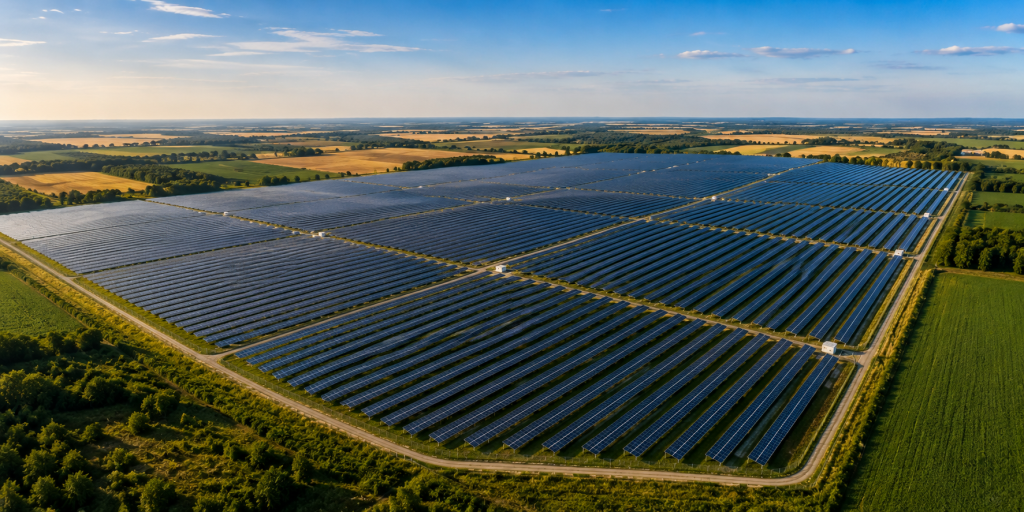
A private investor owned an operating 5 MW solar power plant, built to run under the feed-in (“green”) tariff. The asset was designed around a single logic — to generate electricity and immediately sell all of it to the state at a fixed price.
However, the economics of such projects changed significantly: delays in feed-in-tariff payments, rising financial risks, changes in the structure of the electricity market and uncertainty over the state-support mechanism after 2030 put the asset’s long-term profitability at risk. The owner faced a strategic task — to enable the plant to operate in a competitive market without dependence on state support, and to create new sources of income.
Project details
- Industry
- Renewable energy
- Area
- Turnkey project delivery
- Scope of work
- Upgrade of a solar plant into a hybrid complex with BESS
- Configuration
- 5 MW solar plant + 10 MW / 20 MWh storage
The problem
An asset dependent on state support in new market conditions
The plant was designed for only one mode of operation — selling all the electricity it generated to the state under the feed-in (“green”) tariff. As the market changed, this model became increasingly risky, and its future after the support mechanism ends became uncertain. The plant needed not just a point improvement but a transformation into an asset capable of generating profit on its own in a competitive electricity market.
-
Dependence on the feed-in (“green”) tariff
The asset's income depended entirely on the state support mechanism — and therefore on the timeliness of payments from the state-owned “Guaranteed Buyer” and on the mechanism itself surviving beyond 2030.
-
A single, inflexible sales model
The plant could only sell all the electricity it produced at once, with no ability to respond to hourly market-price fluctuations and earn on the price spread.
-
Rising financial risks
Payment delays and changes in market structure increased financial risks and reduced the asset's investment appeal and liquidity.
-
No additional sources of income
In the hours without solar generation the asset produced no income. The market's potential (arbitrage, the ancillary-services market) was left unused.
-
The need for a deep technical upgrade
Moving to market operation required not only installing storage, but also upgrading equipment, reconstructing the grid-connection node, obtaining new technical conditions, and an automated control system.
How the problem was identified
The scope and directions of the upgrade were determined through a technical audit of the operating plant and techno-economic modelling. The audit covered the condition of the photovoltaic equipment, the inverter section and the grid-connection node. On this basis, several upgrade scenarios were worked through, each calculated in a detailed financial model (in line with international best practices for evaluating energy-storage projects), accounting for hourly market prices, the generation forecast, battery degradation, operating expenses and post-tariff scenarios. Comparing the scenarios (base, conservative and optimistic) became the basis for choosing the target configuration of the complex.
Solution approach
Key components of the work performed
The team carried out the full cycle of upgrade work on the plant (from audit and modelling to commissioning and putting the facility into operation) and transformed it into a hybrid energy complex. Below are the key components of the work performed.
-
Technical audit and feasibility study
A technical audit of the plant and techno-economic modelling of several upgrade scenarios were carried out, with the optimal configuration selected.
-
Reconstruction design
A reconstruction design for the plant was developed, and new technical conditions for operating the upgraded complex were obtained.
-
Battery energy storage system (BESS)
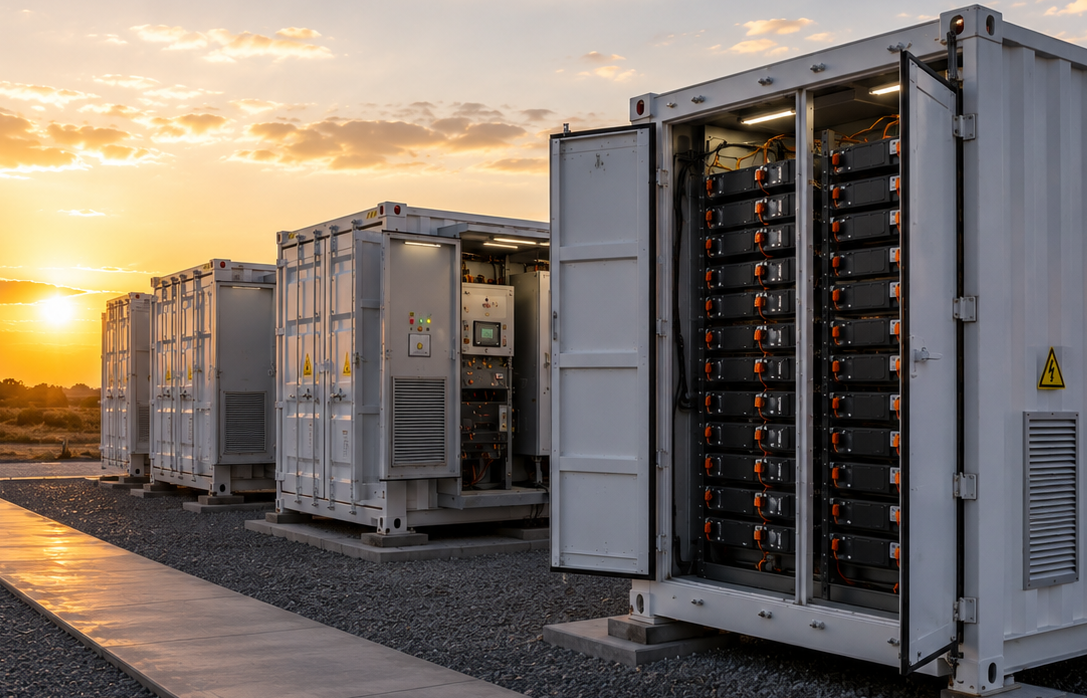
A storage system with 10 MW of power and 20 MWh of capacity (LiFePO₄) was installed — the core of the asset's new business model.
-
Upgrade of the solar plant's equipment
The inverter system was upgraded and some of the photovoltaic modules were replaced to improve generation efficiency.
-
Reconstruction of the grid-connection node
The grid-connection node was reconstructed for the complex's new modes of operation with the grid.
-
Control system (EMS/SCADA)
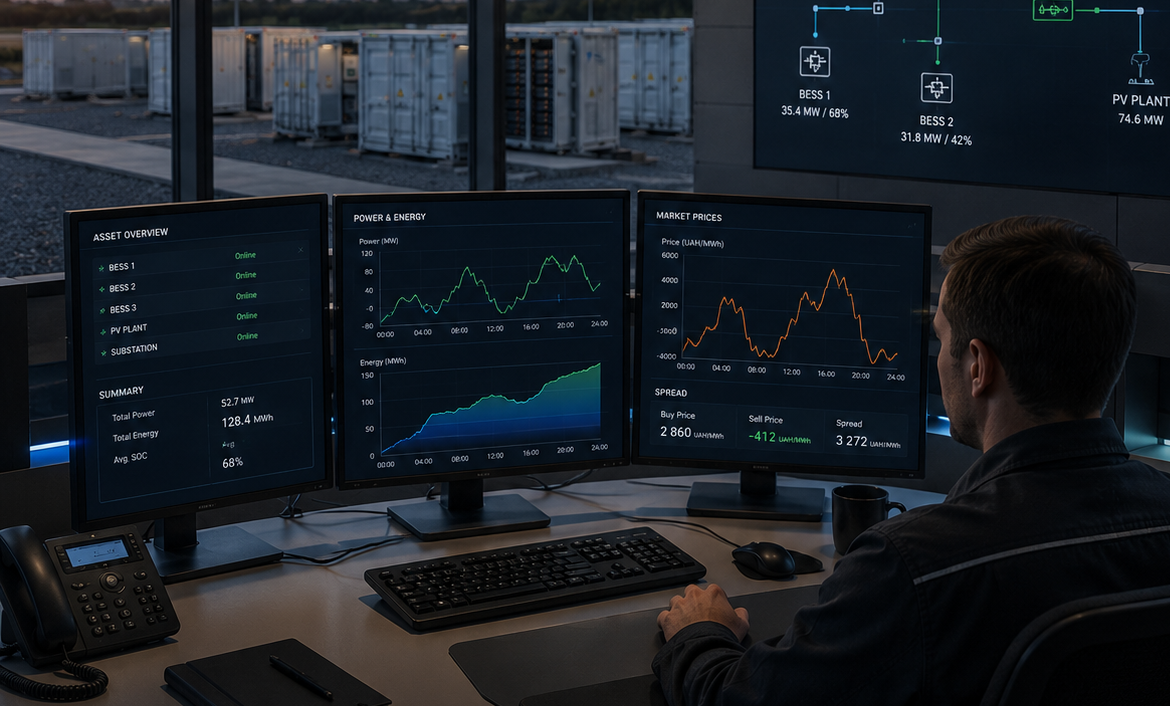
A modern EMS and SCADA were implemented: the system automatically analyses the generation forecast and hourly market prices and determines the optimal charging and discharging modes for the battery.
-
Commissioning and putting into operation
The full scope of commissioning work was completed, and all procedures for putting the facility into operation were passed.
-
Shift to a market model and arbitrage
The plant's operation was shifted from the instant sale of all generated electricity to a model of storing energy and selling it during the evening peak, as well as to an energy-arbitrage model — charging the battery in low-price hours and selling electricity in peak hours.
Results
Outcomes achieved after the upgrade
The operating solar power plant was transformed into a next-generation hybrid energy asset capable of operating in a competitive market. The asset no longer depends solely on state support; instead it uses hourly price fluctuations, stores its own generation and performs energy arbitrage, providing a stable cash flow even after the feed-in (“green”) tariff ends. This increased the asset’s liquidity and investment appeal.
Before the upgrade
-
Income only from selling generation at the feed-in tariff
-
Full dependence on state support
-
No income outside the hours of solar generation
-
Manual control, rigid operating modes
-
High financial risks, uncertainty after 2030
-
Limited asset liquidity


After the upgrade
-
Annual income up 40% thanks to the new model
-
Operation on a competitive market with no dependence on state support
-
Additional income from energy arbitrage around the clock
-
Fully automated control (EMS/SCADA)
-
Reduced risks, projected payback of 6 years
-
Higher asset value and readiness for the ancillary-services market


