
Development of a crisis exit plan for a mining company
-
8weeks
diagnostics and plan development
-
4workstreams
of crisis-factor analysis
-
6-8months
stabilization plan horizon
Context
Initial state
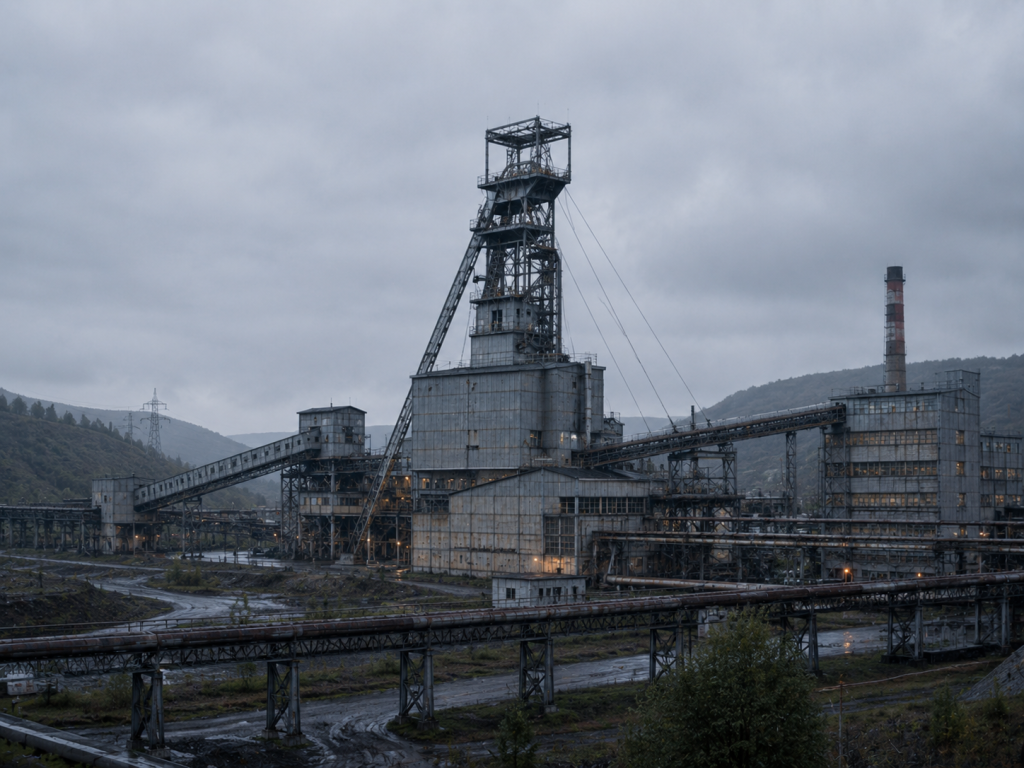
The team was engaged to develop a crisis management plan for a mining (iron-ore) company in a state of deep crisis. Over the preceding years the company had shown a steady decline in output, and by the time the team was engaged production had effectively stopped.
The crisis was cumulative and unfolded under the pressure of several external and internal factors at once: the full-scale war, falling global iron-ore prices, a sharp rise in energy costs, and the build-up of significant accounts payable. Against this backdrop the company had lost most of its personnel due to prolonged non-payment of wages. Critical production competencies were at risk of being lost, and the possibility of restarting production was in question.
Project details
- Industry
- Mining (iron ore)
- Area
- Crisis management
- Scope of work
- Diagnostics + crisis management plan
- Situation at the start
- Production stopped, deep crisis
- Duration of planning
- 8 weeks
- Plan horizon
- 6–8 months (stabilization)
The problem
A deep crisis with no coherent exit plan
At the time of engagement the company was in a critical state that combined financial insolvency, halted production, wear and deterioration of assets, and the erosion of its core workforce. The business was operating reactively, without a concrete algorithm or mechanism for exiting the crisis, which only worsened its position.
-
Halted production, wear and deterioration of assets
Production had been stopped. Equipment and infrastructure stood idle without proper maintenance — which increased the volume of repairs needed to restart and required separate assessment within the plan.
-
Critical financial position and debt pressure
Accumulated accounts payable, a lack of working capital and the risk of bankruptcy proceedings paralyzed operations — without a plan for restructuring and raising financing, launching even a minimal production cycle was impossible.
-
Erosion of the core workforce
Due to prolonged non-payment of wages, a significant part of the personnel had resigned or stopped coming to work — the company was losing the bearers of critical production competencies, which required a separate plan to bring the team back and rebuild it.
-
Unfavorable market and external environment
Falling iron-ore prices amid a sharp rise in energy costs and wartime risks shifted the break-even point — the plan had to be built on a revised economic model of the company.
-
Absence of a coherent crisis management plan
There was no single roadmap, no prioritization of measures and no center for managing stabilization — decisions were made reactively, without an understanding of the sequence of steps and the resources needed to exit the crisis.
-
Uncertainty for stakeholders
Creditors, suppliers, employees and public authorities had no clear vision of the company's future and faced systemic non-fulfilment of obligations — which undermined trust and required a crisis-communications plan as a separate workstream.
How the problem was identified
The depth and structure of the crisis were determined through a comprehensive diagnostics of the company’s financial and operational condition, carried out as part of the plan development. The diagnostics covered four workstreams: financial stability and liquidity (analysis of financial condition, liquidity, accounts payable and bankruptcy-proceedings status, break-even assessment); workforce and production risks (assessment of headcount, critical competencies, organizational structure and risks to production); stakeholders and reputation (analysis of the positions of employees, labor unions, creditors, counterparties, the state and the city); and the operating model (analysis of the production model, recovery barriers, an estimate of the investment and advance financing required for the restart). This diagnostics became the factual basis for developing the crisis management plan.
The solution
Structure of the developed crisis management plan
Based on the diagnostics, a detailed crisis management plan was developed — a step-by-step roadmap for exiting the crisis. The plan defines specific measures, their sequence, owners and required resources, as well as provides for forming a management team and a crisis management headquarters (PMO) for subsequent implementation. Below are the key components of the developed plan.
Financial restructuring and crisis communications
-
Accounts-payable restructuring plan
A mechanism for restructuring debt with creditors was defined — to relieve debt pressure and remove the company from the threat of bankruptcy.
-
Plan to raise financing for the restart
The amount and sources of advance financing for priority needs were defined — to restore production assets and launch the production cycle.
-
Optimization of the financial cycle and costs
Directions for optimizing the financial cycle and overhead costs were worked out, and the break-even point was calculated under the new market conditions.
-
Plan to reset relations with stakeholders
A crisis-communications plan was developed: open dialogue with creditors, suppliers, employees, local authorities and the community — to restore trust and reposition the company.
-
GR and workforce engagement plan
The plan set out meetings and public addresses to the workforce and local authorities, along with engagement with labor unions — to bring the team back and secure support for the company's restart.
Operational stabilization and guidance for next period
-
Launch of the crisis management headquarters (PMO)
A crisis management headquarters was established as the single center for managing stabilization. The plan identified the key projects required for the restart, assigned project managers and introduced a regular reporting system.
-
Asset-recovery plan
The plan substantiated the minimum required CAPEX and defined priority repairs of equipment and infrastructure to bring capacity back into working order while meeting HSE and regulatory requirements.
-
Plan to bring back and build production teams
Measures to bring back key personnel and build production teams were defined, along with a system of motivation and management of operational efficiency under restructuring.
-
Production restart plan
A sequence of steps was defined to restore the production process and gradually return to operations after the shutdown.
-
Update of the operating model and planning system
The plan set out a production-planning system and prepared the ground for a digital twin of the company's operating model — to move from crisis mode to a sustainable growth model for the following year.
Measurable achievements after developing the plan
Results
The outcome of the work was a detailed crisis management plan — a well-grounded roadmap that gives the company a clear course of action for exiting the crisis and restarting production.
Before the team's engagement
-
Reactive management without a plan
-
No mechanism for managing stabilization
-
Wear and deterioration of production assets
-
Critical financial state, risk of bankruptcy
-
Uncertainty and stakeholder distrust


After the plan was developed
-
Step-by-step roadmap for exiting the crisis
-
Crisis headquarters (PMO) and a project portfolio established
-
Well-grounded repair and recovery program
-
Break-even point defined, financing and debt-restructuring plan
-
Crisis-communications plan with creditors, authorities, workforce


