- Financial and operational modeling
- Investment management
- Investment project appraisal
- Project management
- Operational efficiency
- AI-driven process automation
Digital twins
A DIGITAL TWIN OF THE OPERATING SYSTEM
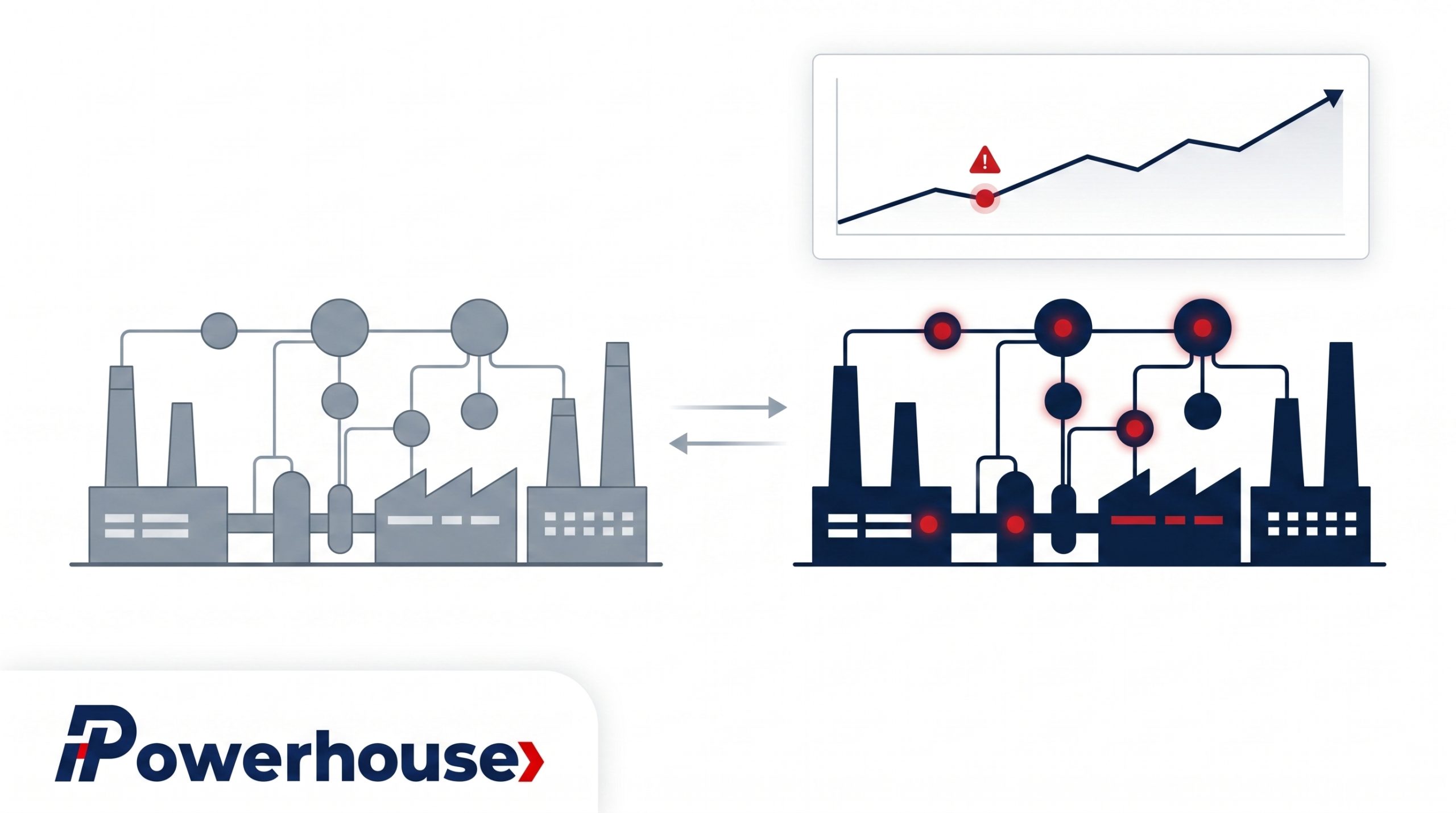
Traditional management reporting shows what has already happened. By the time a leader sees a problem in a report, it is already costing money. Reactive management is the norm for most industrial companies, but amid high operational complexity it means direct losses. A digital twin is a dynamic model of your operating system that lets you see not the past but the current state and the future — and make decisions before a deviation becomes a loss.
You get: a digital model of the operating system with all key relationships and result-driving factors; automatic forecasting of key indicators based on actual and historical data; a system for the early detection of deviations and negative trends before they develop into something critical; a tool for testing management decisions before implementation — without risk to the real business.
The service is designed for industrial and energy companies with high operational complexity that seek to move from reactive to proactive management — and to gain real control over the operating result in real time.

- Management-reporting systems
- BI tools for operational management
- Data analytics for decision-making
- AI tools implementation
- Training staff in the effective use of AI
- Building engagement with authorities, communities, and other stakeholders
- Operational management and process design
- Implementing CRM and BI tools
- Managing social and humanitarian projects
Key challenges addressed:
- reactive, after-the-fact management
- late detection of problems
- decisions without testing their consequences
Key areas of work:
-
Identifying the factors behind the target result — we determine which operational parameters truly affect the result and build a single system of their relationships.
-
Building a digital model of the operating system — we create a dynamic model of the business based on program-and-target modeling principles that reflects the real logic of operations.
-
A detailed plan-versus-actual analysis system — we set up high-frequency comparison of planned and actual indicators with automatic calculation of deviations.
-
Automatic forecasting of indicators — the model independently calculates the expected trajectory of key indicators given the current state and accumulated data.
-
Automatic identification of deviations — the system flags negative trends and factors requiring management intervention before they become critical.